


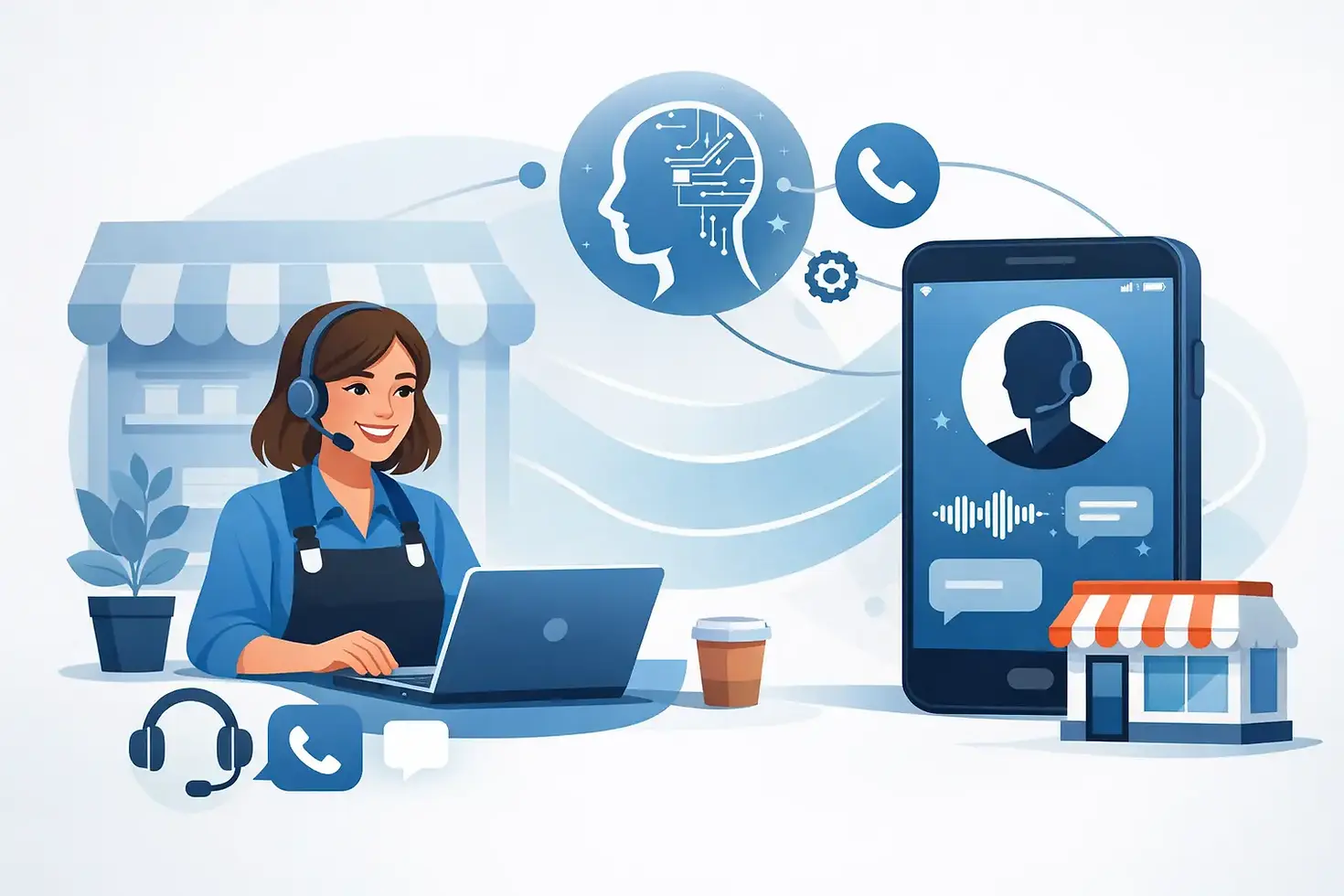
AI Call Answering Service for Small Business
Missed calls rarely feel urgent in the moment. Then the day ends, voicemail is full, two new leads never got a response, and a customer books with someone else. That is exactly why an ai call answering service for small business is getting real attention from local companies that cannot afford to miss opportunities.
If you run a service business, front desk traffic is unpredictable. One hour is quiet, the next hour your team is juggling walk-ins, jobs in progress, text messages, and ringing phones. Calls go unanswered for perfectly normal reasons, but the customer on the other end does not see the reason. They just see a business that did not pick up.
An AI call answering service gives you a way to respond faster without hiring another full-time person just to cover the phone. For many small businesses, that is the difference between steady growth and constant lead leakage.
What an AI call answering service for small business actually does
At a practical level, this kind of system answers incoming calls, speaks with callers, handles common questions, and routes the conversation toward the next step. That next step might be booking an appointment, collecting lead details, sharing business hours, answering service-area questions, or sending the call to a human when needed.
The value is not that it sounds futuristic. The value is that it covers the moments when your team is busy, after hours, or simply unavailable.
For a local business, that matters more than most owners realize. A missed call is often not just a missed conversation. It is a missed estimate, a missed table reservation, a missed consult, or a missed first impression.
Why small businesses lose leads on the phone
Most owners do not have a phone problem. They have a capacity problem.
The phone rings while a dentist is with a patient, while a med spa team is checking someone in, while a contractor is on a job site, or while a restaurant is in the middle of lunch rush. Even businesses with good staff still miss calls because the work comes first.
Then there is the follow-up problem. Voicemails stack up. Numbers get transcribed wrong. Calls that came in at 8:15 p.m. wait until the next day, and by then the customer has already called two other businesses.
That is where AI earns its place. It is not replacing your best employee. It is covering the gap between customer intent and your team’s availability.
Where AI call answering works best
This works especially well for businesses that get repetitive calls and need fast response times. Home service companies are a clear example. Many callers want to know if you serve their area, what services you offer, and how soon someone can come out.
Appointment-based businesses also benefit because the goal is usually simple and time-sensitive. The caller wants to book, reschedule, confirm availability, or ask a common question before committing.
Restaurants, clinics, auto detailers, salons, med spas, retail stores, and local contractors all tend to deal with the same pattern: incoming calls that matter, but not always enough staff capacity to answer every one live.
If your business depends on calls turning into appointments, estimates, or visits, the phone is part of your sales process whether you treat it that way or not.
The real benefits of using AI on your phones
The biggest benefit is speed. Customers get an answer right away instead of hitting voicemail. That alone can improve lead capture because many people simply call the next business if no one answers.
The second benefit is consistency. Your business hours, service types, intake questions, and booking steps do not change based on who is working the front desk that day. The experience becomes more reliable.
The third benefit is less stress on your team. Staff can focus on customers in front of them instead of feeling pulled in five directions. That usually improves service quality, not just efficiency.
There is also an after-hours advantage. A lot of local businesses still treat evenings and weekends like dead zones for lead response. They are not. People often call when they finally have time to handle personal tasks. If your business can answer those calls, you stay in the running.
What AI should handle and what should stay human
This is where smart setup matters.
An AI call answering service for small business should handle high-frequency, structured conversations well. Think appointment requests, business info, FAQs, lead intake, and routing. Those are repeatable tasks that benefit from speed and consistency.
But not every conversation should stay with AI from start to finish. Sensitive issues, unusual requests, upset customers, and high-value sales conversations may need a person. The best systems are not trying to trap every caller inside automation. They know when to hand things off.
That trade-off matters. If the setup is too rigid, callers get frustrated. If it is too loose, your team still gets interrupted constantly. Good call automation sits in the middle. It handles the predictable work and escalates the rest.
What to look for before you choose a service
Not all AI phone tools are useful for real small business operations. Some sound impressive in a demo but create more cleanup work later.
Start with the basics. Can it answer quickly, speak clearly, collect accurate information, and move the caller toward a useful outcome? If the answer is no, the extra features do not matter.
Next, look at how well it supports booking and follow-up. For many small businesses, the phone is not just an information line. It is where leads convert. If a caller cannot easily schedule the next step, you are only solving half the problem.
You should also pay attention to customization. A plumbing company, med spa, and restaurant do not need the same phone flow. Your service should reflect your hours, services, service area, and the way your business actually operates.
Finally, think about how it fits with the rest of your customer communication. If your phone system is separate from your website chat, social DMs, and lead follow-up, things get messy fast. Small businesses usually do better with one connected setup than with a stack of disconnected tools.
Common concerns business owners have
The first concern is usually voice quality. Owners worry that callers will feel like they are talking to a machine and hang up.
That can happen if the experience is poorly configured. But most callers care less about whether the first voice is AI and more about whether they get help quickly. Fast, clear, useful beats slow and human more often than people expect.
The second concern is control. Some owners worry the system will say the wrong thing, mishandle a lead, or create confusion. That is a fair concern, and it is why setup, testing, and ongoing management matter. AI is not something you turn on once and forget forever. It needs to reflect the real rules of your business.
The third concern is whether it is worth it for a smaller operation. In many cases, smaller businesses benefit the most because they feel every missed call more directly. If you only miss a few good leads each week, the cost of doing nothing adds up quickly.
Why setup matters more than the technology itself
The software matters, but strategy matters more.
A good AI call answering system should be built around your real customer journey. What are callers asking most often? Which calls should book immediately? Which ones need staff follow-up? When should a call be transferred? What details should be captured every time?
Those choices shape results. A generic script will not perform like a setup designed around your business.
This is one reason many small businesses prefer a done-for-you approach. Instead of piecing together phone tools, chat tools, website updates, and follow-up systems on their own, they want one managed solution that actually works together. That is the gap companies like HEY LALO are built to solve.
Is an AI call answering service right for your business?
It depends on your call volume, your team capacity, and how much business you lose when calls are missed or delayed.
If you answer nearly every call live, have strong front desk coverage, and rarely miss leads, AI phone support may be less urgent. But if calls regularly go to voicemail, after-hours leads sit untouched, or your staff is overwhelmed, the case gets stronger fast.
The simplest test is this: if faster answers would lead to more booked jobs, more appointments, or fewer lost opportunities, then your phones are not just an admin task. They are a growth channel.
And growth channels need coverage.
The right AI call answering service for small business does not add more complexity to your day. It removes friction. It helps you answer more often, respond faster, and give customers a better first interaction without putting more pressure on your team.
For busy owners, that is the point. No extra chaos, no missed moments, just a better way to catch the business that is already trying to reach you.


